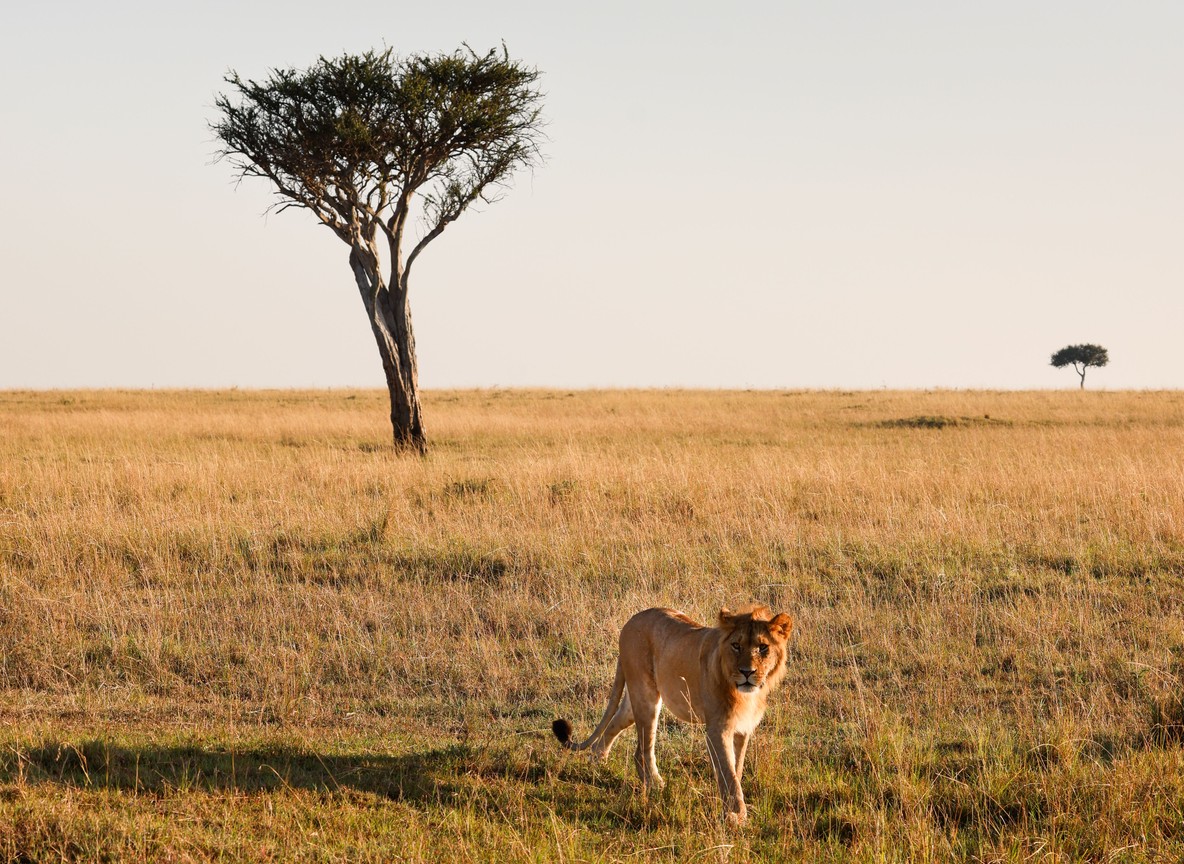
A honeymoon safari in East Africa sits at an unusual intersection of wild and intimate. You wake before dawn to lions calling across open savanna, spend your mornings tracking wildlife across ancient plains, and return to a private suite where the afternoon is entirely yours. Getting this kind of trip right takes more than picking a lodge and a departure date. The destination, the timing, the camp size, and the sequence of experiences all shape how the trip actually feels. This guide covers the decisions that matter most, from which country to prioritize to what the different budget tiers realistically deliver.
What Sets a Safari Honeymoon Apart from Other Trips
Privacy Above All
Most honeymooners want their own space. That means private game drive vehicles rather than shared group departures, camps with fewer than 20 guests, and lodges that can flex their schedule around you rather than fitting you into a fixed group program. The difference between a shared safari and a private one is meaningful on a honeymoon. You can stop for as long as you want at a leopard sighting, call off a drive if you’d rather spend the morning at the pool, and eat at a time that suits you. That kind of flexibility is not available in a standard group setup.
Romance Is in the Small Moments
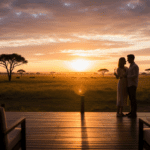
Candlelit dinners set under an acacia tree. Champagne delivered to your tent after an early game drive. A plunge pool overlooking a waterhole where elephants come to drink at dusk. These are not standard safari features. They are specific to camps that have thought carefully about the couples’ experience. The best ones layer surprises in without turning the whole trip into a performance. Understated tends to land better than theatrical.
No Logistics to Manage on the Day
Safari days start early, often at 5:30 AM, span multiple parks or conservancies, and frequently involve small charter flights between camps. The planning complexity behind a well-run honeymoon safari is real. A good one keeps none of that visible on the day. Arrivals are smooth, transfers work, and you are never left wondering what happens next.
Which Destination Fits Your Honeymoon
Kenya: Classic Safari with Beach Access
Kenya’s Masai Mara and its surrounding private conservancies are among the most established honeymoon safari settings on the continent. The private conservancies outside the main reserve, including Naboisho, Olare Motorogi, and Ol Kinyei, operate with strict vehicle limits and low guest caps, which keeps the experience exclusive even during high season. Wildlife in these areas is excellent and predictable across most of the year.
After safari, Kenya offers a natural beach extension. Diani Beach on the south coast provides a relaxed Indian Ocean option with calm water and easy access from Nairobi. Lamu, further north, suits couples who want something quieter and more atmospheric, with Swahili architecture, no cars on the main island, and a genuinely unhurried pace.
Tanzania: Remote, Wild, and Deeply Romantic
Tanzania feels larger and less trafficked than Kenya outside the peak migration months. The Serengeti spans nearly 15,000 square kilometers, and camps in the northern and central zones can put you far from other vehicles. The Ngorongoro Crater remains one of the most concentrated wildlife settings anywhere, with a dense year-round population of predators and large herbivores inside a compact volcanic bowl.
Zanzibar fits naturally onto the end of a Tanzania safari. A few nights in Stone Town, a sunset dhow cruise on the Indian Ocean, and a beach stretch on the north or east coast give the trip a distinct second chapter.
Combining Both Countries
A 10 to 14-day trip can move through both countries without feeling rushed. A workable structure: two to three nights in a Masai Mara conservancy, a short charter flight south to the Serengeti for two to three nights, a night or two in Ngorongoro, and four nights in Zanzibar. The variety serves couples who want more than one landscape and more than one mode of travel.
Timing Your Honeymoon Safari in East Africa
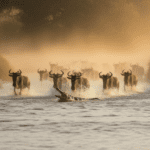
June through October is dry season across both countries. Wildlife concentrates around water sources, vegetation is lower and easier to see through, and the Great Migration builds toward its Mara River crossings in July through September. These are also the most popular months, which means higher lodge rates and the need to book well in advance.
November and December fall in the short rains. Afternoon showers are common but rarely disruptive to a full day. Rates drop, guest numbers thin out, and the landscape turns green and more photogenic. This period suits couples with a flexible schedule who want good wildlife alongside fewer people.
January through March covers calving season in the southern Serengeti, when hundreds of thousands of wildebeest drop their young in a compressed window. Predator activity during this period is intense. Kenya remains excellent for wildlife through these months. Rates are moderate and the overall atmosphere is quieter than peak season.
April and May are the long rains. Some roads become difficult, certain camps close for the season, and wildlife is harder to spot in dense vegetation. Rates are at their lowest here, and the period suits couples who are genuinely flexible and prioritizing value over ideal conditions.
What to Look for in Honeymoon-Friendly Lodges
Guest Limits Matter
A camp with 16 to 20 guests creates a fundamentally different atmosphere than one with 40 or 60. Smaller properties can serve dinner wherever they choose, run game drives without forming a convoy, and give guides more time with each vehicle. For a honeymoon, this is worth prioritizing over a larger lodge with a longer amenities list.
Position Inside the Wildlife Zone
A lodge 45 minutes from the park boundary burns time every morning and evening that could be spent on game. Camps inside private conservancies or within the park itself put you in the action from the first drive. This is a detail many people overlook when comparing properties by price or room photos.
Purpose-Built for Couples
Some camps are excellent all-around safari properties that also handle romance well. Others are specifically designed for couples, with suites that have private outdoor showers and plunge pools, guide teams that know how to read the day and build in surprises, and kitchens that can produce a full bush dinner at a scenic spot on short notice. The latter category is worth seeking out even if the room rate is slightly higher.
Budget Ranges: What Each Tier Delivers
Mid-range honeymoon safari covers comfortable romantic lodges in well-positioned locations, semi-private or small-group game drives, some scheduling flexibility, and the possibility of a beach extension. The typical range is $6,000 to $10,000 per person over 10 days, including domestic flights between camps.
Luxury honeymoon safari adds private game drive vehicles, exclusive suites, starbed sleep-outs, bush dinners, spa access, and a beach extension as a standard component. This tier runs roughly $12,000 to $18,000 per person for a similar duration.
Ultra-luxury means exclusive-use villas, private guides who go only with your vehicle, helicopter transfers between camps, fully bespoke experiences, and no shared elements of any kind. Pricing starts around $20,000 per person and can exceed $35,000 for 10 to 14 days.
The jump from mid-range to luxury is largely about privacy and personalization. The jump from luxury to ultra-luxury is about exclusivity and the complete absence of shared components.
Explorer Notes
Book suites 6 to 12 months ahead for peak-season travel. The best camps in Masai Mara conservancies and the Serengeti fill early, and availability for specific room types disappears faster than general property availability. Do not assume a camp is available just because it appears on a booking platform.
Mention your honeymoon at the time of booking, not on arrival. Lodges can arrange champagne, room upgrades, or private setups in advance when given enough lead time. Flagging it on check-in is too late for anything beyond a congratulations.
Build in at least one full rest day. Safari mornings start early and the days cover substantial ground. By day four of a back-to-back schedule, fatigue begins competing with appreciation. A half-day or full rest day mid-trip makes a real difference in how the second half lands.
Pack for the game drive, not the lodge. Khaki, olive, and beige work best in the vehicle. Most camps also maintain smart-casual dinner norms, so one or two nicer items are worth including. Binoculars are often provided by lodges but carrying your own means you are never without them.
Three well-chosen camps beat six rushed ones. A honeymoon is not the trip to optimize for destination variety. Depth of experience at fewer locations tends to produce stronger memories than a tight itinerary covering as much ground as possible.
Conclusion
A honeymoon safari in East Africa rewards couples who make thoughtful choices early. The destination pairing, the season, the camp size, and the built-in flexibility matter far more than the length of the amenities list at any single lodge. Get those decisions right and the trip runs itself. Get them wrong and even a beautiful property feels like a compromise. The planning effort is front-loaded, but the payoff is a trip that genuinely lives up to the occasion.
Every trip described here can be tailored: dates, budget, camps, and pace built around you.
Get a Personalised Safari